


The Plastic Problem
A Serious Concern
Plastic has penetrated so deeply into our daily lives that it has become irreplaceable. However, fossil-based plastics have severe environmental consequences, emitting harmful greenhouse gases and contaminating our ecosystems. The result is a serious plastic problem, with microplastics commonly found in our water, food, and wildlife.

Closing the Loop
PLA's Role in the Circular Economy
To address this issue, we must consider both the beginning and end of life for plastics. This means transitioning from fossil-based raw materials to natural, renewable sources. Bio-based plastics offer a solution, but not all bio-based plastics are degradable. In line with India's vision for a circular economy, bioplastics play a vital role in minimising environmental footprint, conserving natural resources, and fostering sustainable growth. By embracing bioplastics, we can create a more regenerative and restorative economy that benefits both people and the planet.
Empowering a circular economy through PLA bioplastics, reducing waste and promoting a regenerative future.
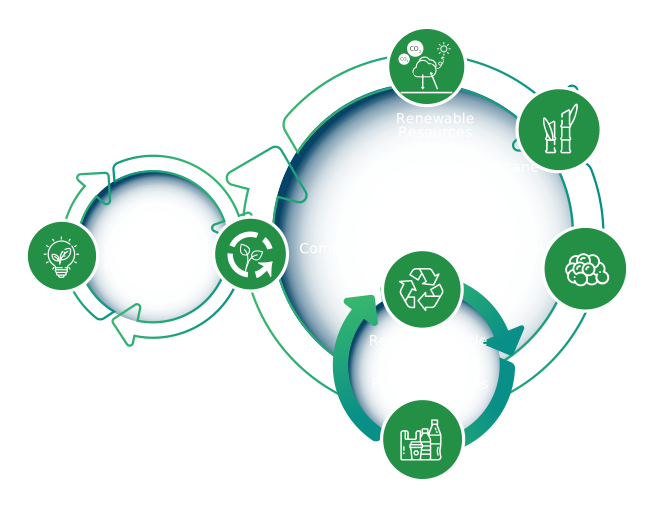
End-of-Life solutions for PLA
Mechanical recycling recovers (biobased) plastic waste through mechanical processes to recreate resins without changing the chemical structure. It's an end-of-life option for the majority of biobased plastics.
Advanced recycling comprises different technologies that convert (biobased) plastic waste into an upstream feedstock, resulting in secondary raw materials that have the same quality as virgin materials.
Organic recycling includes industrial composting and anaerobic digestion. Compostable plastics save valuable organic waste from landfill and incineration and help turn waste into beneficial, high-quality compost.


Empowering Rural Prosperity, Enriching Lives
As a catalyst for socio-economic transformation, BCML drives positive change for the underprivileged, fostering equity, sustainability, and livelihood opportunities that uplift marginalised communities and build a better India.
As an industry champion in sustainable innovation, Balrampur Chini Mills Limited promotes eco-friendly practices. The company has consistently led in renewable energy, waste reduction, and green technology. Founded in 1975, BCML has transformed industries with groundbreaking solutions. From bioethanol to bioplastics, BCML's innovations have made a significant impact. BCML integrates ESG principles into every aspect of operations, fostering responsibility and accountability. This strategy embodies the company's vision for a sustainable future and leadership in corporate citizenship.